.png)
%201%201.svg)




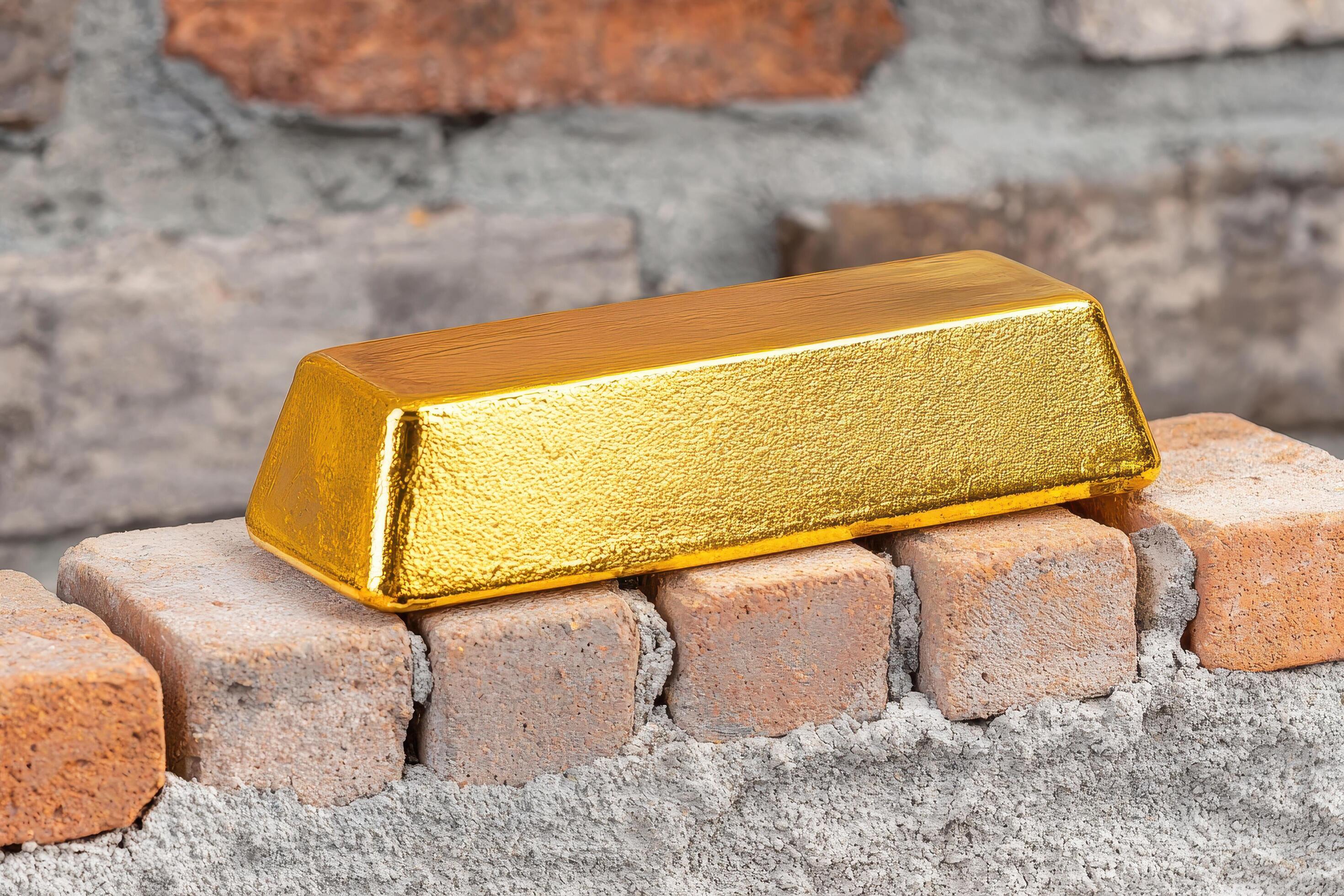
In the first quarter of 2026, the "battle of the tangibles" has taken a dramatic turn. For decades, real estate was the undisputed king of wealth building. However, as we watch mortgage rates finally dip below the 6% mark for the first time in years, the housing market isn't exactly "taking off." Instead, it is stalling, with national home price growth projected at a flat 0% for the year.
Meanwhile, gold is fresh off a rally that pushed it toward $5,300. If you are looking to move your "paper" wealth into a hard asset, the choice between real estate and gold has never been more consequential.
While the media celebrates mortgage rates hitting 5.98% this week, the reality on the ground is different. Most homeowners are still sitting on 3% or 4% rates from years ago. This has created a "lock-in effect" that has frozen inventory.
In a 2026 economy defined by shifting trade policies and geopolitical "black swans," liquidity is your greatest asset. 1. Instant Liquidity: If you need to liquidate $100,000 of real estate, it could take 60 to 90 days (if you're lucky). If you need to liquidate $100,000 of gold, it takes about 15 minutes.2. Zero Maintenance: A gold bar doesn't have a roof that leaks, a tenant who stops paying, or a property tax assessment that doubles. It is a "silent" asset that sits in a secure vault, doing its job without requiring a single phone call.3. The "Replacement Value" Hedge: As construction costs rise due to 2026's new industrial tariffs, the cost to build new homes is skyrocketing. While this supports home values long-term, it makes entry into the market prohibitively expensive for most. Gold, by contrast, is divisible. You can start with an ounce or a kilo, making it a much more accessible "hard asset" for the average retiree.
J.P. Morgan and other institutional leaders are forecasting gold to potentially average $5,400 by next year, while housing economists expect real (inflation-adjusted) home prices to actually decline in 2026.
When you factor in that real estate is a "local" asset—vulnerable to local tax hikes and zoning changes—and gold is a "global" asset—recognized from New York to Dubai—the security profile of gold becomes clear.
If your goal is to generate active monthly income and you have the stomach for "landlording," real estate remains a viable tool. But if your goal is to protect your purchasing power with the least amount of friction and the highest degree of safety, physical gold is the superior hard asset for 2026.
For most of our clients at National Gold Reserve, the strategy is simple: own the home you live in, but put your "protective wealth" into a Gold IRA.
Senior Market Analyst National Gold Reserve

Get personalized guidance from a trusted advisor. Just submit the form to get started.


