.png)
%201%201.svg)





Picking the right retirement account shapes your financial future. Gold IRAs and Traditional IRAs each offer distinct benefits and trade‑offs. This guide highlights the key differences, risks, and tax rules so you can decide with confidence. Many people worry about asset protection and growth. A Gold IRA lets you hold physical precious metals to diversify and help hedge inflation and market swings. We also cover rollovers, eligibility, and long‑term growth so you fully understand your options.
Gold IRAs let you hold physical gold and other precious metals. Traditional IRAs usually hold stocks, bonds, and mutual funds. Knowing these differences helps you choose the option that matches your financial goals.
Gold IRAs can strengthen your retirement strategy by adding tangible assets and potential tax benefits.
Benefit
Gold IRA
Traditional IRA
Tax Advantages
Tax-deferred growth
Potential tax-deductible contributions
Inflation Protection
Strong hedge against inflation
Dependent on market performance
Diversification
Physical asset diversification
Primarily paper assets
Gold IRAs bring benefits but also specific risks you should weigh before investing.
Tax rules differ between account types. Gold IRAs grow tax‑deferred, so gains aren't taxed until withdrawal. Traditional IRAs may let you deduct contributions now, but withdrawals are taxed.
Moving funds from a Traditional IRA into a Gold IRA requires steps to comply with IRS rules. The process typically includes:
If you're considering a Gold IRA rollover, National Gold Reserve offers a free consultation to walk you through the process and answer your questions.
To open a Gold IRA you must meet IRS eligibility rules. Generally, holders of qualified retirement accounts can roll funds into a Gold IRA. Know these rules to stay compliant and maximise your investment potential.
When choosing between a Gold IRA and a Traditional IRA, weigh your financial goals, risk tolerance, and diversification needs.
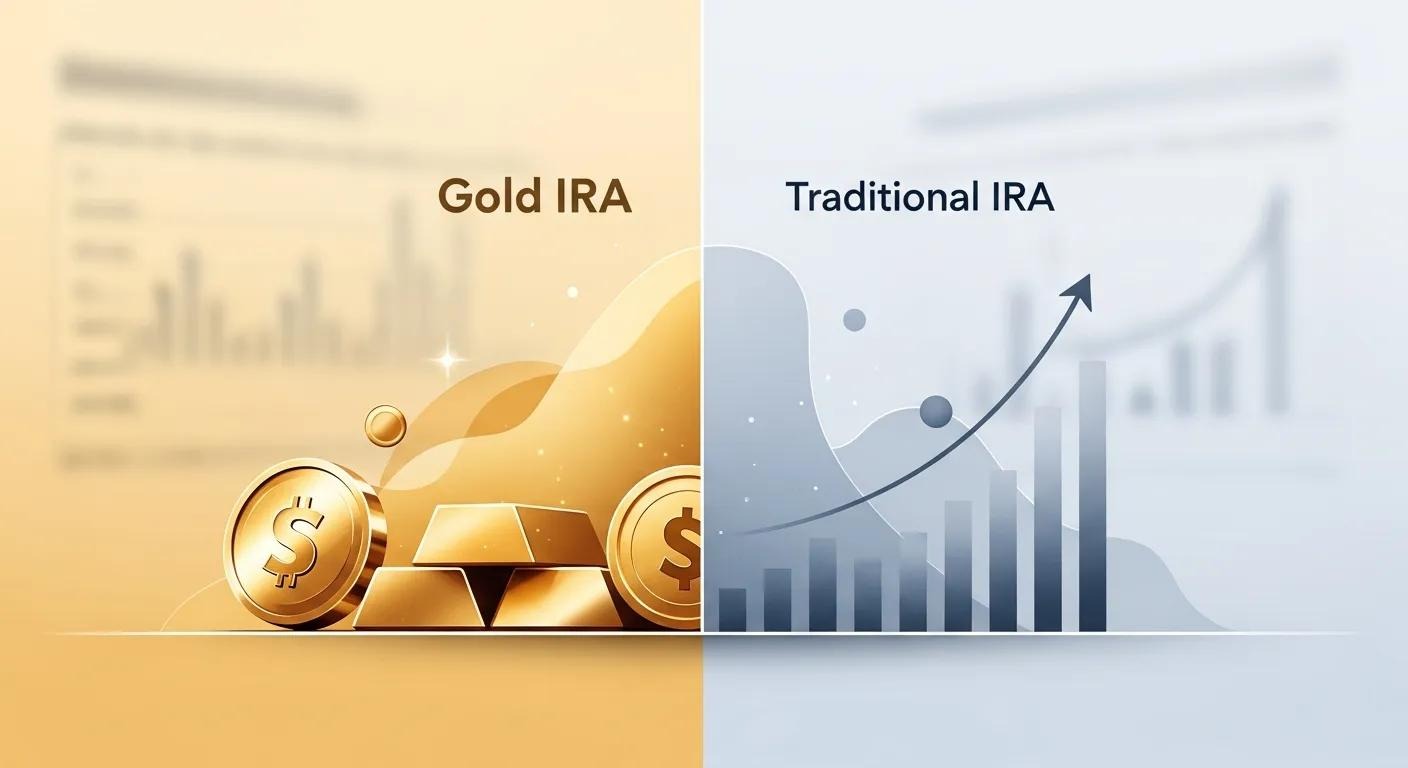
In short: Gold IRAs emphasise physical assets and inflation hedging, while Traditional IRAs depend more on market performance. Use these distinctions to guide your retirement strategy.
Physical gold offers a tangible source of security and stability compared with the intangible nature of stocks and bonds. Both approaches have merits; choose based on your goals and risk tolerance.
Gold IRAs offer tax‑deferred growth and, in specific situations, tax‑favoured withdrawals. Traditional IRAs can provide immediate deductions but impose taxes on withdrawals. Know the conditions that apply to each.
A Gold IRA rollover follows clear steps to remain compliant and transfer funds smoothly:
Follow these steps to navigate the rollover effectively.
You can usually roll over a qualified account, such as a Traditional IRA or 401(k), into a Gold IRA. Confirm your account type and review IRS rules before you proceed.
To keep a Gold IRA rollover secure and compliant, take these actions:
Gold IRAs can hedge inflation but face price volatility and liquidity limits. Traditional IRAs may offer steadier growth tied to markets but carry market risk. Balance rewards against the risks for your situation.
Market swings affect precious metals' value. Gold often performs better in downturns, which makes it a useful diversification tool. Track market trends to manage risk.
Over the long term, gold has often retained value during uncertainty, which can benefit Gold IRAs. Traditional IRAs' growth depends on market returns and is less predictable.
Storage choices matter. Use IRS‑approved depositories that meet rules to protect your assets and maintain compliance.
Secure storage methods for physical gold in IRAs include:
Storage and custodian fees influence the total cost of a Gold IRA. Compare custodians and fee schedules to choose the best option for your budget.
Expect setup and annual fees, transaction costs for buying and selling, and potential hidden charges. Review fee disclosures before you commit.
Custodian and storage fees are often higher for Gold IRAs due to physical asset handling. Traditional IRAs typically have lower custodial costs. Factor this into your retirement budget.
Hidden costs during a Gold IRA rollover can include transfer transaction fees, custodian charges, and storage expenses. Clarify all fees up front.
In 2026, interest in Gold IRAs grew as investors looked to safe‑haven assets amid economic uncertainty. Tax treatment still allows tax‑deferred growth, which keeps Gold IRAs attractive to some savers.
Precious metals retirement accounts expanded in 2026 as more investors sought tangible diversification. Many view gold as a hedge against inflation and market volatility.
Key IRS guidelines to know include:
Adding a Gold IRA can stabilise your portfolio in uncertain times. Gold often hedges inflation and market swings, lowering reliance on paper assets. That diversification can strengthen long‑term security and help smooth returns.
Choose a custodian with a solid reputation, Gold IRA experience, and IRS compliance. Compare fees, services, storage options, and customer reviews. A clear fee structure and secure storage are essential. A financial adviser can help you decide.
Gold IRAs are generally less liquid than Traditional IRAs. Selling physical gold can take longer and prices vary. Understand these limits and plan how you'll access funds when needed.
Yes. IRS rules specify which metals and purity levels qualify and require storage in an approved depository. Learn these rules to avoid penalties and keep tax benefits.
Downsides include higher custodial and storage fees, price volatility, and liquidity challenges. Weigh these risks against the diversification benefits before investing.
Monitor your Gold IRA by checking account statements and performance reports and by tracking current gold prices. Many custodians offer online access. Reviewing economic indicators and consulting an adviser can provide context.
Withdrawals from a Gold IRA are typically taxed as ordinary income, similar to Traditional IRAs. Withdraw before age 59½ and you may face a 10% penalty unless you qualify for an exception. Consult a tax professional for advice.
Choosing between a Gold IRA and a Traditional IRA affects your retirement plan. Gold IRAs offer diversification and inflation protection; Traditional IRAs may provide immediate tax advantages. Understanding both helps you pick the option that fits your long‑term goals. Use available resources to compare choices and decide what works best for you.

Get personalized guidance from a trusted advisor. Just submit the form to get started.


